
Cloud chargeback vs showback comes down to one question: does the cost report change a budget, or just inform a team? Two engineering teams, same company, same cloud provider. One gets a monthly report showing their AWS spend with no further action required. The other gets that same spend deducted from their departmental budget, with real financial consequences if they overrun. Same underlying data, completely different behavioral effect. Contrary to a common assumption, the FinOps Foundation is explicit that neither model is inherently more mature than the other — the right choice depends on your organization’s accounting policies and budget structure, not a maturity checklist to climb.
Table of Contents
Showback: Visibility Without Consequence
Showback means reporting cloud costs to the teams generating them, without actually moving money between budgets. A team sees “you spent $42,000 this month,” but that number doesn’t get deducted from anyone’s P&L — it’s informational. According to FinOps Foundation research, 57% of mature FinOps organizations still use showback as their primary reporting model — it isn’t a beginner phase most teams outgrow, it’s the steady state for the majority of practices.
Where showback works well:
- Organizations early in their FinOps maturity, where the immediate goal is building cost awareness before adding financial pressure.
- Teams where engineering doesn’t directly control budget allocation, and chargeback would create accountability without authority.
- Situations where the primary goal is behavior change through visibility, not formal cost allocation for accounting purposes.
Showback’s strength is that it’s low-friction to implement and doesn’t require finance and engineering to agree on a formal allocation methodology before you can start. Its weakness is that visibility alone doesn’t always change behavior — some teams see the number and don’t act on it because there’s no real consequence attached.
Chargeback: Visibility With Real Cloud Cost Accountability
Chargeback means actually allocating cloud costs to team or department budgets, the same way most companies charge back office space, equipment, or headcount costs. The team’s cloud spend becomes a real line item in their budget, subject to the same scrutiny as any other expense.
Where chargeback works well:
- Mature organizations where engineering teams control their own budgets and are expected to manage them like a P&L.
- Companies where cost accountability needs to be enforceable, not just informational — chargeback creates a direct incentive to optimize.
- Multi-business-unit organizations that need accurate cost allocation for internal accounting or external client billing.
Chargeback’s strength is that it creates real accountability. Its weakness is that it requires accurate, defensible allocation — if the underlying tagging for chargeback and cost allocation data is wrong, chargeback becomes a source of disputes between teams rather than a tool for accountability. Adoption reflects this: only around 18% of mature FinOps organizations run pure chargeback, while roughly 25% run a hybrid of both models.
Cloud Chargeback vs Showback: Comparing Both at a Glance
| Showback | Chargeback | |
|---|---|---|
| Financial impact | None — informational only | Real — deducted from team/department budget |
| Implementation friction | Low — no formal allocation methodology required upfront | Higher — requires finance and engineering agreement on allocation |
| Best fit | Early FinOps maturity, building cost awareness | Mature orgs where engineering owns budget like a P&L |
| Main risk | Visibility without behavior change | Disputes if underlying cost allocation accuracy is weak |
The Prerequisite Both Sides of Cloud Chargeback vs Showback Share
Neither showback nor chargeback works without cost allocation accuracy. If spend can’t be reliably attributed to the team that generated it — because of inconsistent tagging, shared resources, or untagged infrastructure — both approaches produce numbers nobody trusts. Chargeback amplifies this problem because inaccurate numbers now have real financial stakes attached. Most FinOps practitioners recommend at least 80% of spend being reliably attributable before moving to hard chargeback; below that threshold, too much cost lands in an “untagged” bucket and creates allocation disputes rather than accountability.
Why AI and GPU Spend Are Raising the Stakes on This Decision
Cost allocation was hard enough when the bill was just compute, storage, and networking. The FinOps Foundation’s State of FinOps 2026 report found that 98% of organizations now manage AI spend, up from 63% in 2025 and 31% in 2024 — the fastest adoption curve the Foundation has ever recorded. AI and GPU costs behave differently than traditional cloud spend: usage is volatile, harder to forecast, and increasingly tied directly to paying customers or specific product features, which pushes more organizations toward chargeback for production inference workloads even while keeping showback for less predictable or shared environments. Growing adoption of the FinOps Open Cost and Usage Specification (FOCUS) is also making multi-cloud showback and chargeback easier to implement consistently, by normalizing AWS, Azure, and GCP billing data into one schema instead of three incompatible ones.
Cloud Chargeback vs Showback: Which Should You Use?
Since neither model is inherently more mature, the practical decision comes down to two conditions: is cost allocation accuracy high enough to be defensible (generally 80%+ of spend reliably attributed), and do engineering teams have enough budget authority for financial accountability to make sense in your organization’s structure. If either answer is no, showback remains the right fit — not a stopgap. Moving to chargeback before allocation accuracy is solid just moves the tagging argument into a budget dispute. For the operating model this decision fits inside, see what is FinOps, and for the tagging discipline both approaches depend on, see the cloud cost optimization checklist.
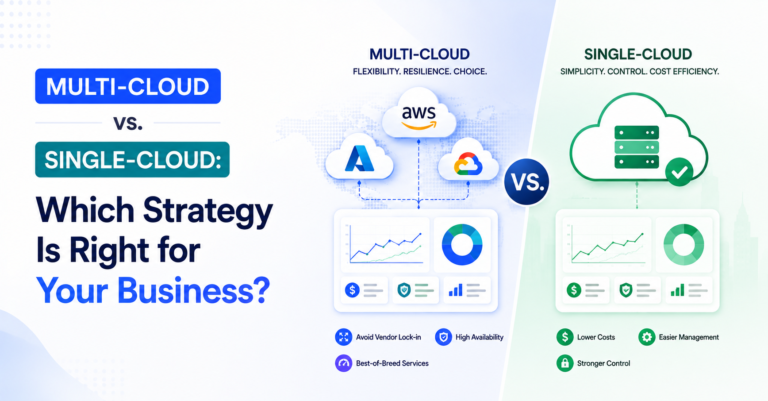
A hybrid approach also works well in practice: chargeback for large, well-tagged production workloads where allocation is unambiguous, and showback for smaller or shared environments where precise allocation isn’t yet reliable. This same maturity curve shows up whether a company runs one cloud or several — see multi-cloud vs single cloud for how that broader strategy decision interacts with cost allocation.
Making Either Approach Defensible
Whether you choose showback or chargeback, the report is only as credible as the underlying allocation. CloudPi, a multi-cloud cost management and governance platform, provides accurate, team-level cost allocation across AWS, Azure, and GCP — the foundation both showback and chargeback depend on to actually change behavior instead of generating disputes.
Frequently Asked Questions
What is the difference between cloud chargeback and showback?
The cloud chargeback vs showback distinction comes down to financial impact: showback reports cloud costs to the teams generating them without moving money between budgets; chargeback actually deducts that spend from the team’s or department’s budget, creating real financial accountability.
Which should a company start with, chargeback or showback?
There’s no universal starting point — the FinOps Foundation is explicit that neither model is inherently more mature. In practice, 57% of mature FinOps organizations run showback as their primary model, so most companies should default to it unless allocation accuracy is already 80%+ and engineering teams hold real budget authority.
Why does cost allocation accuracy matter more for chargeback than showback?
Because chargeback attaches real financial stakes to the numbers — if tagging or allocation is inaccurate, chargeback turns that inaccuracy into budget disputes between teams rather than just an informational report nobody acts on.
Can a company use both chargeback and showback at the same time?
Yes — a hybrid approach is common in practice: chargeback for large, well-tagged production workloads where allocation is unambiguous, and showback for smaller or shared environments where precise allocation isn’t yet reliable.
What FinOps maturity level is needed before moving to chargeback?
Cost allocation accuracy needs to be high enough to be defensible, and engineering teams need real budget authority — moving to chargeback before both are true just shifts a tagging argument into a budget dispute instead of solving it.