• Home
  • Platform
    • Platform Capabilities
    • Integrations
    • Intelligent Workflows
    • Multi Cloud Cost
    • Policy Engine
    • Cost Allocation
    • Billing Analysis
    • Rightsizing
    • Dashboards & Reports

      Platform Capabilities

      Full-stack cloud control layer

      Integrations

      Connect 200+ cloud services

      Intelligent Workflows

      Event-driven task scheduling

      Multi Cloud Cost

      Unified cost visibility

      Policy Engine

      Compliance at enterprise scale

      Cost Allocation

      Tag-based allocation & chargeback

      Billing Analysis

      Deep-dive usage anomalies

      Rightsizing

      AI-powered resource sizing

      Dashboards & Reports

      Real-time custom reporting

      Platform Preview

      CloudPi Platform

      Govern and optimize multi-cloud spending with absolute precision using neural anomaly calculations.

      Cost Optimization +40% ROI
      Security Score 99.9%
      Explore Platform
  • Solutions
    • Solutions by Role
    • Solutions by Persona
    • Why CloudPi

      Solutions by Role

      Custom tools designed for FinOps, Engineering, and Finance.

      Solutions by Persona

      Aligned with executives, managers, and system operators.

      Why CloudPi

      Four core challenges, four answers, one governed system.

      Core Outcomes

      Solutions Value

      Empower your finance, engineering, and FinOps teams to govern cloud operations collaboratively with absolute precision.

      Cost Efficiency Boost +55% Savings
      Time-to-Value Instant Day-1
      Explore Solutions
  • Company
    • About
    • Book Demo
    • Security
    • Features

      About Us

      Our mission, vision & core team.

      Book Demo

      Schedule a custom walkthrough.

      Security

      Zero-trust enterprise protection.

      Features

      Deep dive platform capabilities.

      Trust & Uptime

      About CloudPi

      We are building the future of autonomous cost optimization to help modern enterprise cloud control rooms run efficiently.

      Enterprise Trust Score 100% Secure
      Standard SLA 99.99%
      Learn More
  • Pricing
  • Resources
    • Documentation
    • FAQ
    • Videos
    • AWS S3 Cost Surge
    • Freight Manufacturer
    • API Cost Tracking

      Documentation

      User guides, configurations, and reference manuals.

      FAQ

      Frequently asked questions and support notes.

      Videos

      Walkthroughs, demos, and feature highlight videos.

      Case Studies

      Real-world cloud cost optimization outcomes and client stories.

      Resources Hub

      Learn & Grow

      Explore our collection of detailed guides, video walkthroughs, and case studies to supercharge cost controls.

      Guides & Tutorials 50+ Articles
      Demo Video Views 10K+ Watched
      Visit Learn Center
BOOK DEMO
HomeCloud Cost Optimization How to Reduce Amazon S3 Costs by Minimizing GET Requests

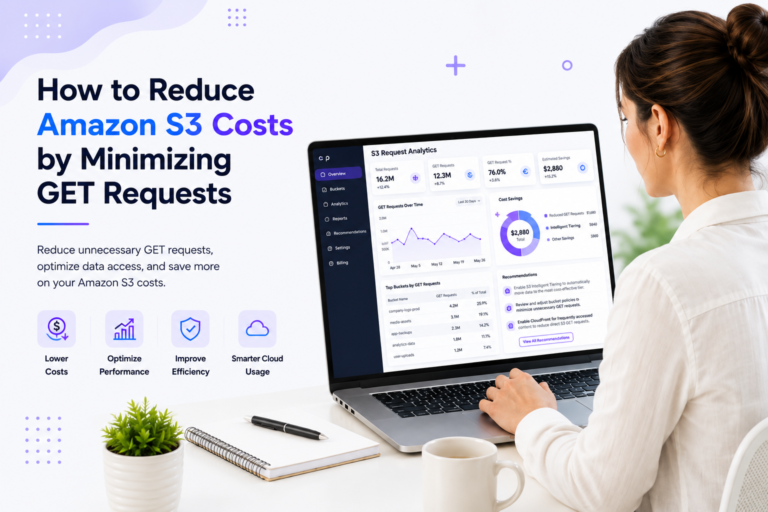
How to Reduce Amazon S3 Costs by Minimizing GET Requests

CloudPi-Blogs on August 19, 2024
Cloud Cost Optimization
Amazon S3
3 Min Read

Amazon S3 is a popular cloud storage service known for its scalability and reliability. However, costs can quickly add up, especially if your application makes frequent GET requests. This guide will explore effective strategies to minimize GET requests, helping you reduce Amazon S3 costs.

Understanding the Cost of GET Requests 

What are GET Requests?

GET requests are HTTP requests used to retrieve data from your Amazon S3 buckets. Each time an object is accessed, a GET request is made, contributing to your overall S3 costs.

How GET Requests Impact Costs

Amazon S3 charges for data retrieval operations, including GET requests. High volumes of these requests can significantly increase your expenses, especially for large datasets or frequently accessed objects.

Strategies to Minimize GET Requests

1. Implement Caching

a. Browser Caching 

Leverage browser caching to store frequently accessed objects locally on users’ devices. Set appropriate cache headers to control the caching duration, reducing the number of GET requests made to your S3 buckets. 

b. Content Delivery Network (CDN) 

Use a CDN like Amazon CloudFront to cache content at edge locations closer to users. CDNs reduce latency and offload GET requests from your S3 buckets by serving cached content, thus lowering costs.

2. Optimize Object Access Patterns

a. Consolidate Small Files 

Consolidate multiple small files into a single larger file. This approach reduces the number of GET requests needed to access the data, minimizing costs.

b. Efficient Querying 

For applications that query large datasets, consider using Amazon S3 Select or Amazon Athena. These services allow you to retrieve only the necessary data, reducing the amount of data transferred and the number of GET requests.

3. Utilize Object Lifecycle Policies

a. Archiving Unused Data 

Set up lifecycle policies to move infrequently accessed data to cheaper storage classes, like S3 Glacier or S3 Glacier Deep Archive. This reduces the frequency of GET requests to your more expensive standard storage classes. 

b. Object Expiration 

Define expiration rules for objects that are no longer needed. This helps you automatically delete outdated files, reducing storage costs and minimizing GET requests for obsolete data.

4. Use Versioning Wisely

a. Limit Versioning for High-Traffic Objects 

While versioning is useful for data recovery, it can lead to an increase in GET requests as users may accidentally access different versions of an object. Limit versioning for objects that are frequently accessed or consider using versioning selectively. 

b. Clean Up Old Versions 

Regularly clean up old versions of objects to reduce the number of GET requests associated with versioned data. This can be automated using lifecycle policies.

Monitoring and Analyzing GET Requests

1. Amazon S3 Metrics and Analytics

Use Amazon S3 metrics and analytics tools to monitor GET request usage. Analyze patterns to identify high-traffic objects and implement optimization strategies accordingly.

2. Cost Allocation Tags

Implement cost allocation tags to categorize and track costs by project, department, or use case. This helps you pinpoint areas with high GET request volumes and take targeted actions.

Conclusion

Minimizing GET requests is a key strategy to reduce Amazon S3 costs. By implementing caching solutions, optimizing object access patterns, utilizing lifecycle policies, and wisely managing versioning, you can significantly cut down on GET request charges. Regular monitoring and analysis will further help in maintaining cost efficiency. 

CloudPi-Blogs on August 19, 2024 Cloud Cost Optimization
previous article
Next article

Leave a comment Cancel reply

Your email address will not be published. Required fields are marked *

About CLOUDPI

CloudPi Editorial Team

Cloud Cost Optimization & FinOps Specialists

Expert insights on FinOps, cloud cost optimization, governance, and automation for modern cloud teams.

  • X
  • Instagram
  • LinkedIn
  • YouTube

FEATURED POSTS

categories

  • AWS 2
  • Cloud Cost Optimization 28
  • CloudPi 6

related articles

  • Finops Life Cycle
    What are the Three Phases of the FinOps Lifecycle?August 18, 2025
  • Finops Team
    How to Build a High-Performing FinOps TeamJuly 22, 2025
  • Cloud Cost Governance
    What Is Cloud Cost Governance and Why Is It Essential for FinOps?July 15, 2025

popular tags

CloudBudgeting Cloud Cost Management Cloud Cost Optimization CloudCostOptimization CloudCostSavings CloudEfficiency CloudManagement CloudOptimization CloudPi CloudSavings Multi-Cloud Management

Read next
2025’s Best Cloud Cost Management Tools: Top 5 Reviewed 12 Min
2025’s Best Cloud Cost Management Tools: Top 5 Reviewed
CloudPi-Blogs on February 10, 2025
Introduction In today’s digital age, Cloud Cost Management has become a crucial aspect for organizations...
CloudPi: Optimizing Multi-Cloud Costs for IT Teams 3 Min
CloudPi: Optimizing Multi-Cloud Costs for IT Teams
CloudPi-Blogs on November 27, 2024
In today’s dynamic IT landscape, managing multi-cloud environments efficiently has become a critical challenge...
Understanding Cloudpi: The Future of Cloud Integration Platform 3 Min
Understanding Cloudpi: The Future of Cloud Integration Platform
CloudPi-Blogs on November 27, 2024
In today’s digital era, businesses are continuously seeking efficient, scalable, and secure solutions to manage...

CloudPi helps organizations gain visibility into multi-cloud spending, optimize infrastructure costs, and enforce governance across AWS, Azure, and Google Cloud environments.

AvailableInMarket-AWS-DUHaQVhh
Linkedin Instagram X-twitter Youtube
PLATFORM
  • Platform Capabilities
  • Integrations
  • Intelligent Workflows
  • Cloud Cost Analytics
  • Policy Engine
  • Pricing
COMPANY
  • About Us
  • Features
  • Contact Us
  • Careers
  • Security
  • Privacy Policy
  • Terms of Service
RESOURCES
  • User Guide
  • Press Releases
  • FAQ
  • Case Studies
  • Blog
  • Events
  • Webinars

categories

  • vs. Finout
  • vs. CloudZero
  • vs. Apptio Cloudability
  • vs. PointFive
  • vs. ProsperOps
  • vs. Harness

© 2026 CloudPi. All rights reserved.

Back to top