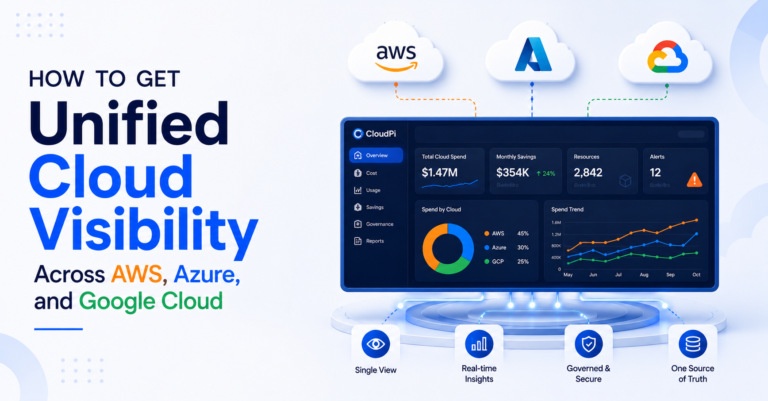
Unified cloud visibility means seeing spend, usage, and resource inventory across AWS, Azure, and GCP in one place, using one consistent taxonomy — not three provider views stitched together after the fact. Three browser tabs, three login sessions, three different definitions of what counts as a “cost center” — that’s what a Monday morning cost review looks like at most companies running multi-cloud without it. By the time someone manually reconciles AWS Cost Explorer, Azure Cost Management, and GCP’s Billing console into one spreadsheet, the data is already a week stale and half the context is lost in translation.
Table of Contents
Why Native Consoles Can’t Give You Unified Cloud Visibility
Each provider’s billing console is built to answer questions about that provider. AWS Cost Explorer is excellent at explaining AWS spend. It has no concept of your Azure spend existing at all. This isn’t a feature gap you can configure around — it’s the fundamental design of a single-provider tool. Getting unified cloud visibility requires a layer above all three, not a better configuration of any one of them.
The Three Requirements for Real Unified Cloud Visibility
A common multi-cloud data model. AWS tags, Azure tags, and GCP labels use different syntax and different default conventions. Unified cloud visibility requires normalizing all three into one cloud cost taxonomy — the same “team,” “environment,” and “cost center” fields, regardless of which cloud generated the resource.
Consistent time granularity. If AWS data updates daily but Azure data is pulled weekly, a “unified” view is really three views on different clocks stitched together. Real unification means every provider’s data refreshes on the same cadence.
One place to ask cross-cloud questions. The real test of unified cloud visibility isn’t “can I see AWS spend and Azure spend on the same screen” — it’s “can I ask ‘what does the payments team spend across all three clouds combined’ and get an answer in one query.” That requires the underlying data to actually be joined, not just displayed side by side.
What Becomes Possible Once You Have Unified Cloud Visibility
Unified cloud visibility isn’t just a convenience — it unlocks decisions that are structurally impossible without it:
- True total cost of ownership per team, not per cloud, so a team running services across two providers has one number to manage against.
- Cross-cloud anomaly detection, catching a spend spike that’s small on each individual provider but significant in aggregate.
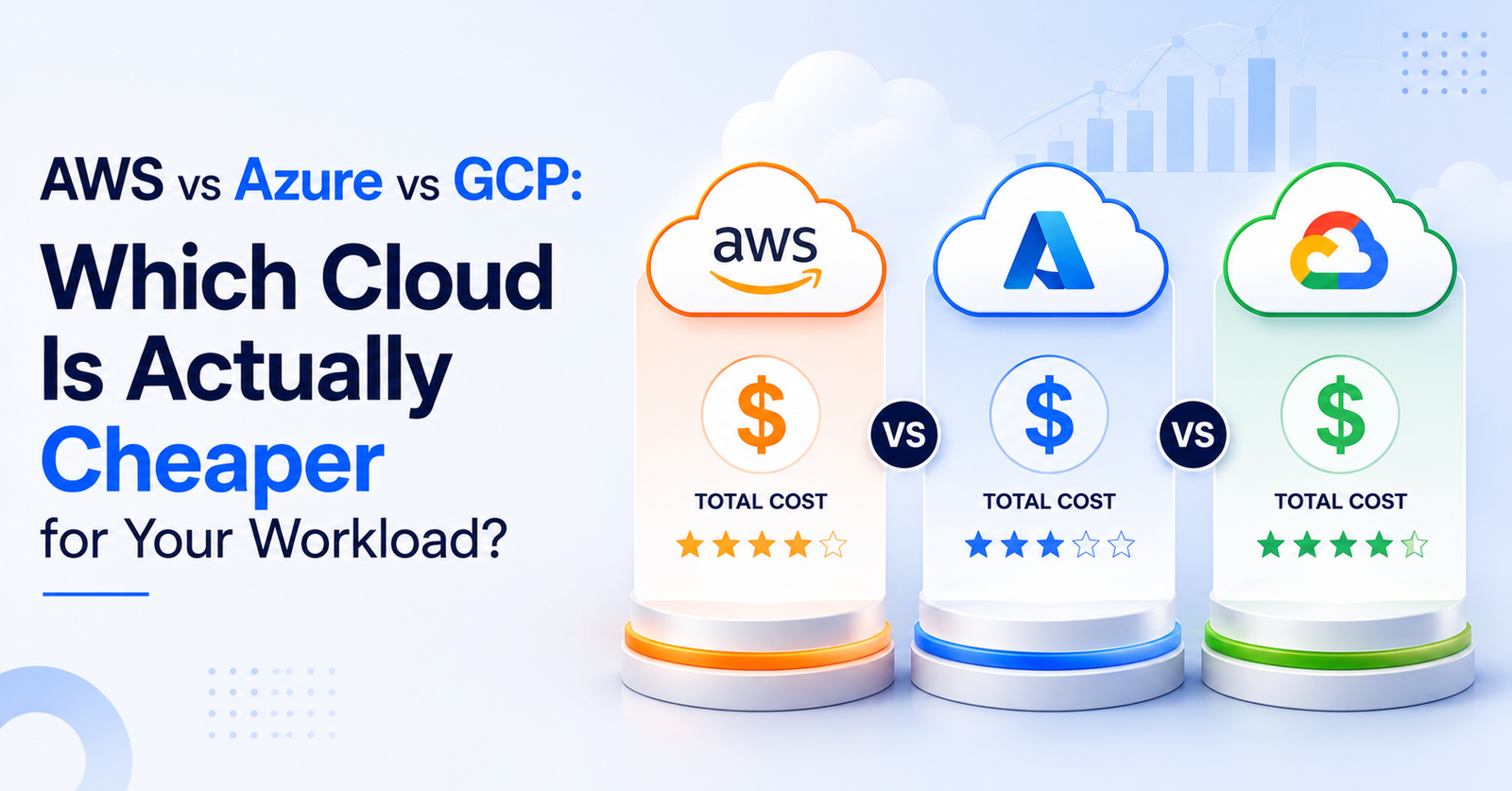
- Apples-to-apples provider comparison for workload placement decisions, based on your actual usage patterns instead of list pricing — see AWS vs Azure vs GCP cost for how that comparison actually plays out by workload type.
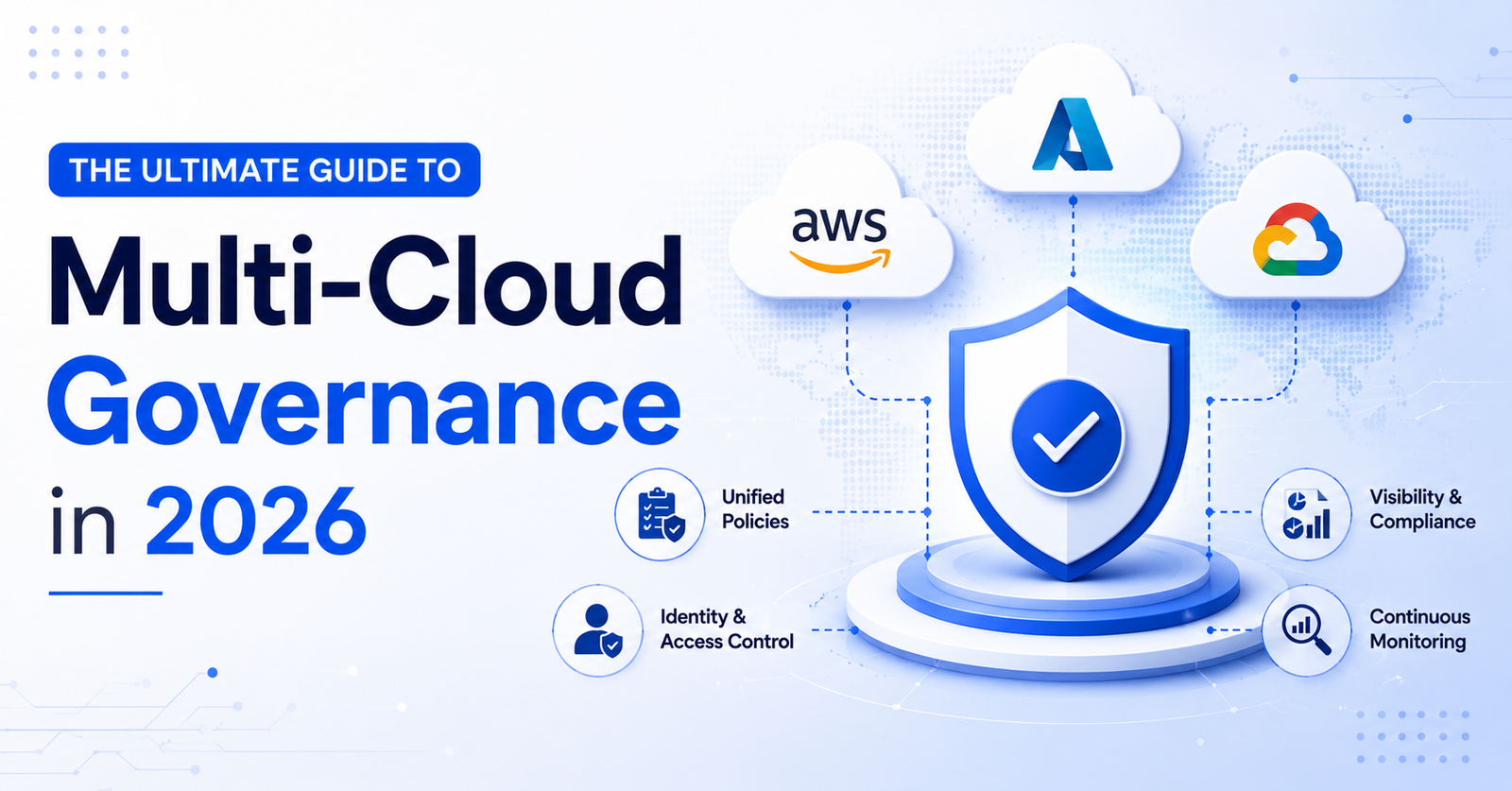
- One governance and tagging enforcement layer, instead of three separate policy implementations that drift out of sync — the same problem covered in the multi-cloud governance guide.
Getting Unified Cloud Visibility Without a Multi-Quarter Data Engineering Project
Building this internally means standing up ingestion pipelines for three separate billing APIs, normalizing the data models, and maintaining that pipeline as each provider changes their billing format — a real engineering investment most teams don’t have the bandwidth to sustain long-term. For the broader discipline this feeds into once the data exists, see multi-cloud cost management.
CloudPi, a multi-cloud cost management and governance platform, does this natively: it ingests AWS, Azure, and GCP billing and usage data, normalizes it into one taxonomy, and refreshes it on a consistent schedule — so unified cloud visibility is a login, not a data engineering project.
Frequently Asked Questions
What is unified cloud visibility?
Seeing spend, usage, and resource inventory across AWS, Azure, and GCP in one place, using one consistent taxonomy, rather than reconciling three separate provider consoles manually into a spreadsheet.
Why can’t AWS Cost Explorer or Azure Cost Management provide unified cloud visibility on their own?
Because each console is built to answer questions only about its own provider — AWS Cost Explorer has no concept of Azure spend existing at all, so unified visibility requires a layer above all three providers, not better configuration of any single one.
What are the three requirements for real unified cloud visibility?
A common data model that normalizes tags and labels across providers into one taxonomy, consistent time granularity so all providers’ data refreshes on the same cadence, and the ability to ask cross-cloud questions in a single query rather than viewing providers side by side.
What decisions become possible with unified cloud visibility that aren’t possible otherwise?
True total cost of ownership per team rather than per cloud, cross-cloud anomaly detection for spend spikes that are small individually but significant in aggregate, and apples-to-apples provider comparisons based on actual usage instead of list pricing.
Can unified cloud visibility be built in-house, or does it require a dedicated tool?
It can be built in-house, but it means standing up and maintaining ingestion pipelines for three separate billing APIs and normalizing their data models — an ongoing engineering investment most teams don’t have the bandwidth to sustain long-term compared to using a platform built for it.